
Education has two Latin roots: Educare, which means to nourish, and Educere, which means to bring out. While the former suggests the inheritance of knowledge, the latter proposes that education simply brings out what we all intrinsically have. It may be talent, or it may be a desire for knowledge. Either way, this definition is deeply shaped
by how humans have developed societies and cultures overtime: a direct product of our collective push for growth.
I talk about education as it is the primary method in which we as climate champions aim to teach (and learn!) about climate action.
In a highly individualistic and fast paced society, we often deem education in our daily lives a non-priority as we lack the luxury of time and money. I propose that we steer away from the formal connotations of education, in which we connote its meaning with listening to a speaker and memorising pages of unintelligible notes.
Education is all around us, from the parameters of buildings to local fashion style. Thus, much of our knowledge is acquired subconsciously, and it is this perspective that we as climate champions use to our advantage: We can learn about the climate without centring it in our activities. Controversial, I know! But let’s see if your perspective changes by the end of this blog.
Perspective Through Literature
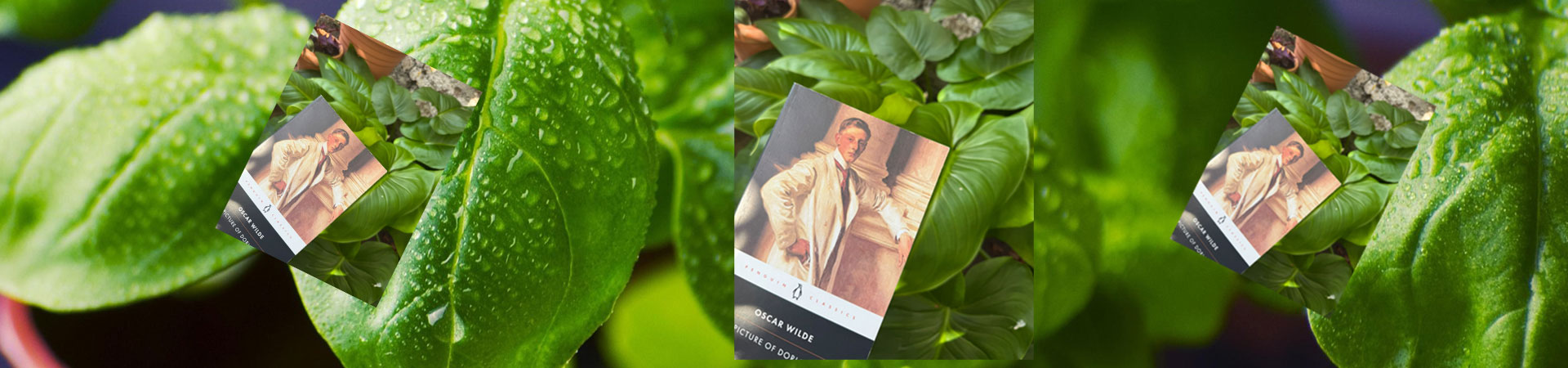
Considering we are based in London, I would like to highlight how literature does exactly this through a book I have recently been reading: The Picture of Dorian Gray by Oscar Wilde.
A short synopsis: Dorian Gray is a young Victorian gentleman in 19th century London. Shocked by his beauty in a newly painted portrait, he trades his soul for eternal youth. As he exploits the social benefits of beauty, he leads a double life of crime and evil. Every immoral act is marked on the portrait, from the darkening of eyes to the upturning
of lips.
A paradox is presented in the portrait itself: The painter views the canvas as an exposure of his own soul, while Dorian sees it as an exposure of his. Two distinct identities are presented by the same object.
The Irony of Climate Action Expectations
We can draw a clear parallel between Wilde’s novel and our lives. We often trade our agency to learn and contribute for comfort and rest, because many of us simply lack the time and resources to be active community members. We see the consequences in the way our streets overflow with rubbish, our children disengage from extracurricular
activities and loneliness breeds in our repetitive routines. This is not an accusation, rather an observation (and possibly a confession).
The most intriguing parallel, however, is how the portrait simultaneously reflects both the artist and the sitter. How can one object represent two different truths at once? It can, if we expand our perspective.
Which brings me back to my previous controversy: decentring climate from climate action.
There is immense pressure to participate in climate action for the sake of ‘saving the planet’ regardless of personal circumstance: using public transport over personal vehicles, buying refurbished devices and reducing food waste, even when we do not have the means to do so. This rigid expectation makes climate action feel tiring,
endless, and quite frankly, boring.
So, what do we do about this? We change our perspective!
A New Framework for Community Action
Maybe climate action is not about ‘saving the planet’. Maybe it’s about the culture, principles, and opportunities we build around it. When we shift our focus, participating in climate action becomes about community and shared purpose. We build relationships, learn new skills, and gain exposure to opportunities otherwise thought unattainable. This satisfies our intrinsic desire for growth and continues the ancient cycle of learning.
This approach allows us to tackle climate action without making it arduous. Yet the byproduct of our efforts circles back to healing the environment. Just as the portrait serves two purposes at once, climate action can enrich our personal lives while simultaneously restoring the world around us.
Claiming Our Educational Agency
The perspectives needed to create a positive climate action culture will inevitably be through education, because education is everything around us. Literature, an educational medium, can open discussions on how we perceive the world.
Connecting a 19th century novel to climate action may seem exaggerated, but it is this subconscious exposure to different perspectives that informs our views, and consequently the actions we choose to make.
We often feel small, that maybe we can’t change the grand scheme of things. Maybe we can, maybe we can’t. Regardless, it’s time to redirect our focus and decide how we want to use our educational agency.
Dorian Gray was obsessed with his portrait, but I don’t know about you, so would I if it meant getting where we need to go! What we need is a re-examination of the subconscious power of education: How it shapes us, enriches our daily lives, and consequently transforms the world around us.
Community Champion Kenza